February 24, 2026
Powering through the storm: What household electricity use during Winter Storm Fern tells us about winter resilience in Texas

Authors: Amber Woodward, International Public Affairs Manager, and Gus Chadney, Director for Data & Modelling
In late January 2026, a winter storm swept across much of the United States, bringing icy temperatures to large parts of the country. In Texas, Winter Storm Fern prompted renewed attention on how households respond to cold weather and what that means for electricity demand.
Texas has recent experience of winter storms causing serious disruption to the power system. In February 2021, Winter Storm Uri led to widespread blackouts, leaving millions of households without electricity for extended periods. Electric heating is relatively common in Texas: 61% of homes use electricity as their primary heating source, compared with just 39% nationwide. During winter storms, maintaining balanced supply and demand is not just an issue for system reliability but household welfare: loss of electricity can mean loss of heating, with potentially serious consequences for health and safety. Managing electricity demand during cold weather is therefore a critical part of ensuring households remain safe during winter stress events.
Since 2021, Texas has introduced major reforms to improve winter resilience, requiring power generators and transmission infrastructure in the ERCOT region to meet mandatory weatherization and emergency preparedness standards, alongside changes to ERCOT governance and regulatory oversight. These measures have materially improved cold-weather readiness across much of the power system, helping reduce the risk of widespread outages during recent winter events.
Against this backdrop of system reform, Winter Storm Fern provides a useful test of how household demand responds to cold weather under today’s conditions. While Fern in 2026 was far less severe than Uri in 2021, it provided an opportunity to examine how household electricity consumption responded to cold temperatures, how the response varied across the state, and how it compared to previous winters.
Using Octopus Energy household electricity data from Texas, we explored how demand changed during the storm and what this can tell us about winter resilience.
We found that:
- Winter Storm Fern led to an increase in household electricity consumption;
- This increase in demand was notable, but not unseasonable;
- Compared to Winter Storm Uri, demand impacts were smaller and shorter-lived;
- The impact varied across the state, with northern regions seeing larger increases;
- Electric heating flexibility, including pre-heating, could help manage peak system stress during cold weather events.
As electrification and climate variability increase, events like Winter Storm Fern show that understanding how household electricity demand responds will be increasingly important for managing peak winter stress.
Winter Storm Fern led to an increase in household electricity consumption
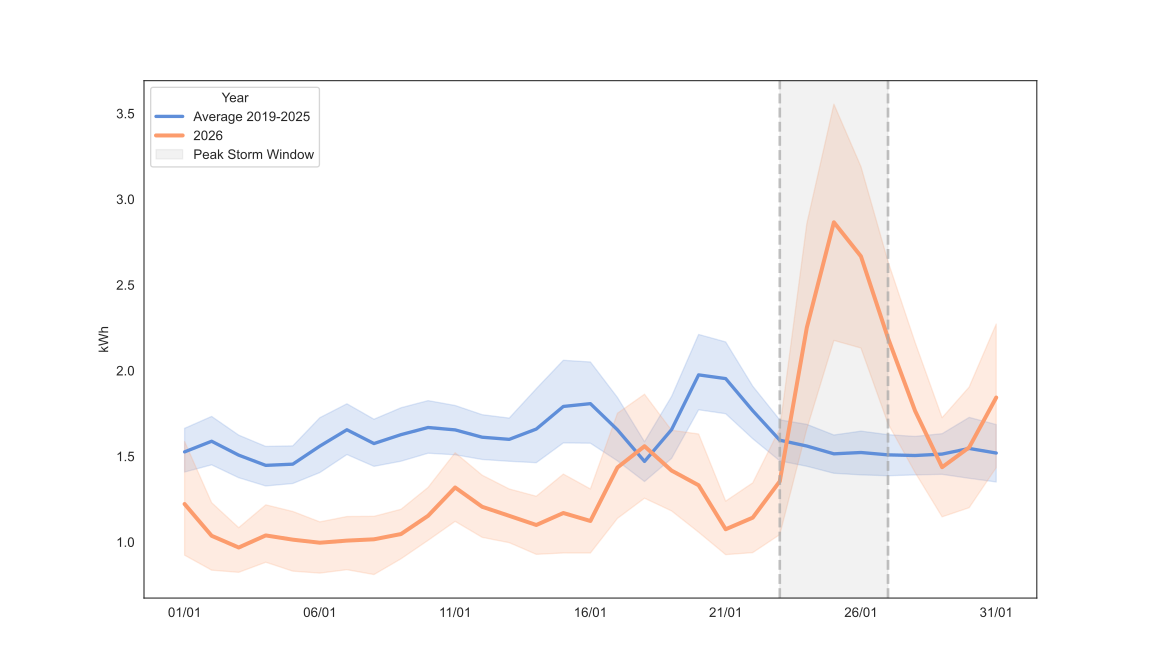
During the core storm period (23rd–27th January), average household electricity consumption increased noticeably compared to the average of the same period in previous years. Figure 1 shows the average daily consumption per meter point in the month of January in 2026, and the average from 2020-2025, with the Winter Storm Fern window highlighted.
Consumption during the storm was clearly elevated relative to surrounding days and to historical patterns, indicating a strong response to colder-than-usual temperatures.
The increase in demand was notable, but not unseasonable
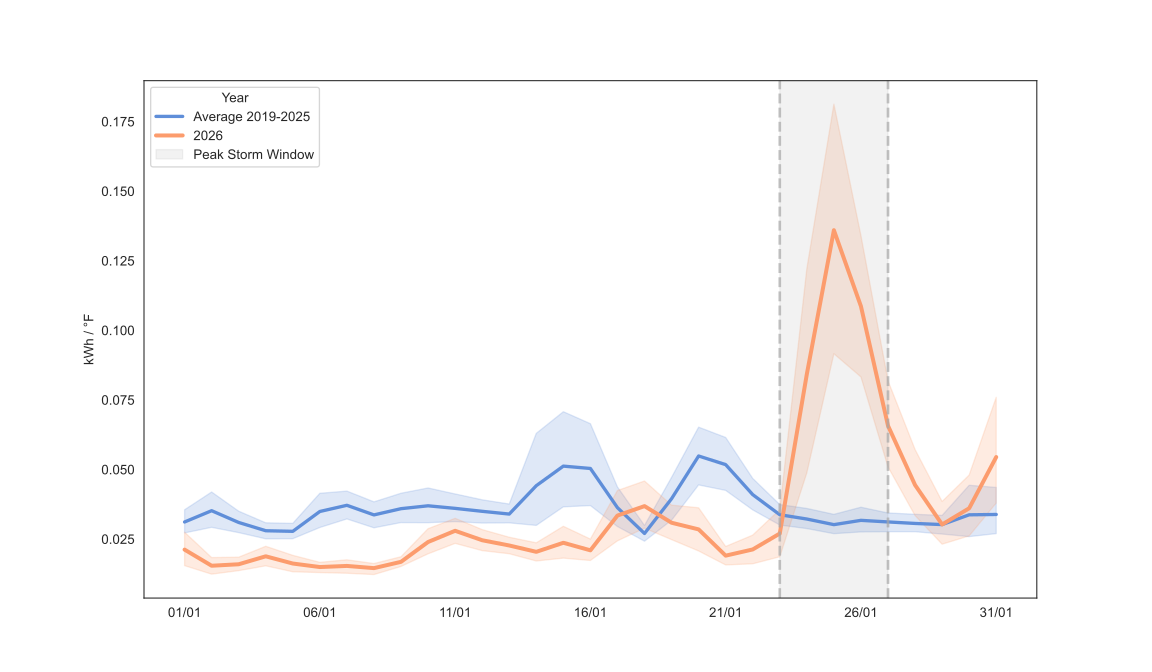
While demand rose during Winter Storm Fern, this increase was not wildly beyond the range observed in recent winters. After normalising consumption for temperature, comparable levels of household electricity use appear elsewhere in January, in 2023, 2024 and 2025.
This suggests that the response to Winter Storm Fern was consistent with typical cold-weather behaviour rather than an exceptional demand event.
Compared to Winter Storm Uri, demand impacts were smaller and shorter-lived
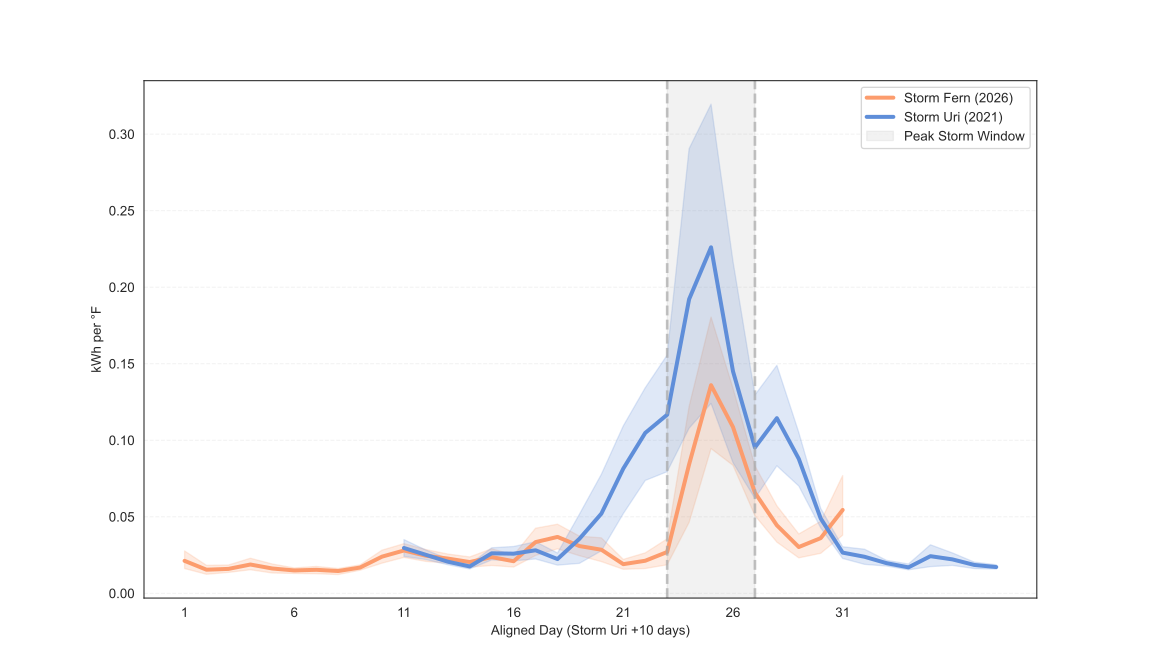
Winter Storm Fern had a fairly time limited impact on household electricity demand. While consumption increased during the core storm period, this rise was short-lived, with demand returning quickly to seasonal norms once temperatures began to recover.
During Uri, household electricity consumption was substantially higher, with a more sustained peak driven by prolonged extreme cold. Figure 3, which aligns the peak storm periods for both events, illustrates the severity of Uri compared to Fern in both magnitude and duration.
From a system perspective, this distinction matters. Short, predictable demand spikes like those seen during Winter Storm Fern are far easier to manage than prolonged periods of elevated demand, reinforcing that the greatest risks arise not from cold weather alone, but from widespread, long-lasting extremes that coincide with supply constraints.
Regional impacts varied across the state
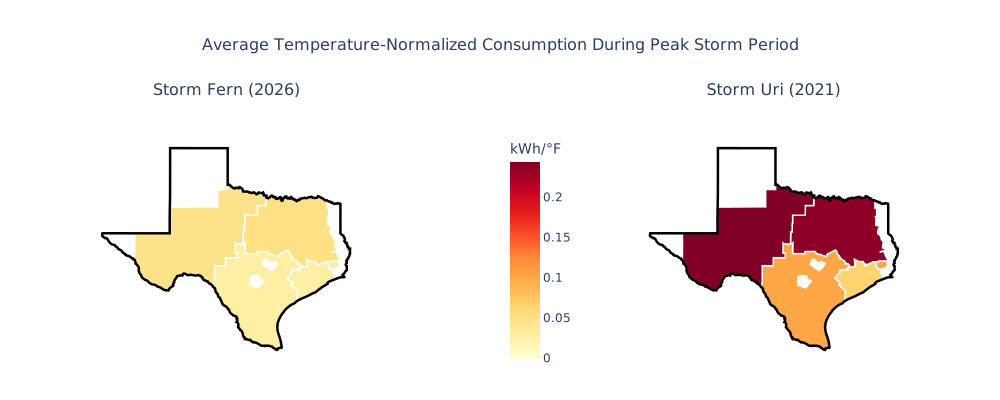
The increase in electricity consumption during Winter Storm Fern was not uniform across the state. Northern load zones experienced larger temperature-normalised increases in demand than southern ones. Localised demand spikes can still create operational challenges, even when statewide demand remains manageable.
Because this analysis focuses on electricity consumption only, this pattern could simply reflect differences in heating technologies, building efficiency and consumer behaviour. Households around Dallas and Houston rely more heavily on electric heating, while households in other parts of the state meet a greater share of heating demand through gas. As Octopus is an electric-only supplier in Texas, the data does not capture the impact on heating demand for gas-supplied households.
Electric heating flexibility, including pre-heating, could help manage peak system stress during cold weather events
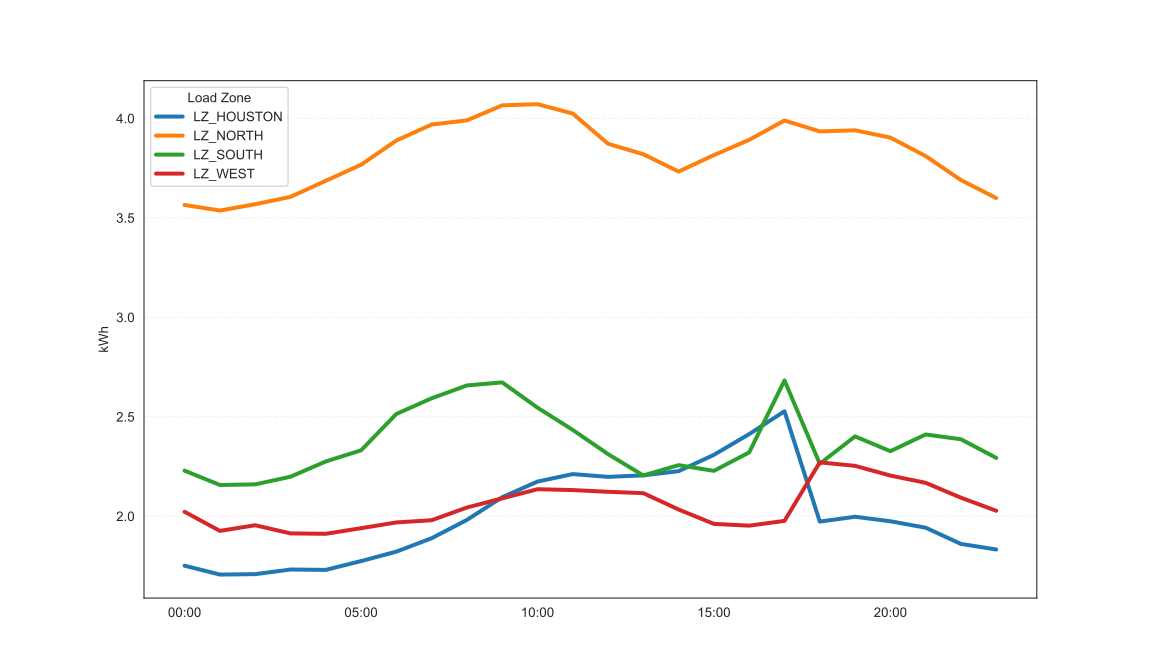
Electric heating has distinct demand profiles. The chart below shows hourly electricity consumption on the peak storm day, 25 Jan 2026, for the four ERCOT load zones. It shows distinctive smooth increases in consumption during the morning, and sharp spikes in the evening, characteristic of home heating demand. The results are particularly stark in the northern and southern load zones, reinforcing that winter resilience is not only about when demand peaks, but where.
Electric heating can act as a flexible demand resource during cold weather peaks. Previous Centre for Net Zero analysis of Octopus Energy programmes in Texas, covering both heating and cooling, found that customers accepted 94% of remote thermostat adjustments during peak demand periods. Similar research with Nesta in the UK, where heat pumps were remotely controlled, found that only 9% of the time did participants opt out of flexibility events before they began.
Modelling of the Texas data suggests that pre-heating can sustain flexibility even under more severe atmospheric conditions. Under extreme external temperatures, adjusting internal temperatures prior to an event could see survival probabilities remain as high as 90–97% over 150 minutes. This indicates that pre-heating could make even longer periods of control viable during bouts of extreme cold, precisely when demand and grid constraints are likely to be greatest.
Our trial with heat pump users in the UK also suggests there was no day too cold for flexibility within the range of temperatures observed, although sub-zero conditions were not reached. More research is needed to understand how heating flexibility performs during prolonged or sub-zero cold spells — an area Centre for Net Zero continues to explore.
In ERCOT’s nodal market, where prices reflect local constraints across time and location, there are strong system incentives to manage demand at a granular level. Although wholesale price signals cannot be directly passed through to consumers following legislative changes in 2021, suppliers and aggregators still benefit from reducing exposure to peak prices. Well-designed incentives, including targeted rewards for automated heating management, can therefore align consumer comfort with system resilience.
What this means for winter resilience in Texas
Winter Storm Fern provides a useful example of a moderate winter stress event rather than a system-wide shock. Household electricity demand increased, but the scale and duration of that increase were within historical norms.
The fact that there were no major outages in ERCOT’s service area during Storm Fern is encouraging, and suggestive that reforms since Winter Storm Uri may be protecting households, especially when other regions were not so fortunate. But the system is yet to be tested to the same degree as it was in 2021. Extreme and prolonged cold remains a significant risk.
As electrification and climate variability increase, understanding how household electricity demand responds to winter weather will be increasingly important. More important still is understanding how consumers can be incentivised to flex demand, for example through short, time-limited adjustments or pre-heating, to play an increasingly important role in managing peak winter stress without compromising comfort.